
Teeth Cleaning & Dental Hygiene in Georgetown
A professional teeth cleaning is the simplest, most effective way to protect your smile between visits. At Still Waters Dental Group, our dental hygienists gently remove the plaque and tartar that brushing and flossing can't reach, helping you prevent cavities and gum disease and keep your teeth healthy for life. We've cared for Georgetown and Halton Hills families for more than 17 years and new patients are always welcome. CDCP accepted.
- (905) 702-9744
- (905) 702-9744
Direct Dental Insurance Billing. CDCP Accepted. Open Mondays–Saturdays.
What is professional teeth cleaning?
Professional teeth cleaning, also called a dental prophylaxis, is a routine hygiene procedure that removes built-up plaque, tartar (also known as calculus), and surface stains from your teeth and along the gum line. Plaque is the soft, sticky film of bacteria that forms on teeth every day; when it isn't removed, it hardens into tartar, which can only be taken off with professional dental tools. Removing it protects both your teeth and your gums.
Dental insurance, direct billing and CDCP
Still Waters Dental Group accepts most dental plans and offer direct billing meaning that you only pay the difference after your appointment. We also accept the Canadian Dental Care Plan (CDCP). Most dental insurance plans cover routine cleanings and exams.
Dental insurance and plans can be confusing so our team is happy to help you understand your coverage complimentary.

Why regular dental cleanings matter
• Prevent gum disease: removing tartar along the gum line helps stop gingivitis from progressing to periodontal disease.
• Prevent cavities and tooth decay: clearing plaque protects tooth enamel.
• Fresher breath: eliminating bacteria and buildup reduces. persistent bad breath (halitosis).
• A brighter smile: polishing lifts surface stains from coffee, tea, and wine.
• Early detection: your hygienist and dentist can spot decay, gum issues, and other concerns early, including an oral cancer screening.
• Better overall health: research links healthy gums to better general health.
What to expect during your cleaning appointment
Dental exam & X-rays
Your visit starts with a thorough examination of your teeth, gums, head, and neck, plus any needed digital X-rays to check for decay, bone loss, or issues below the gum line. This is also when we perform an oral cancer screening.
Scaling: plaque & tartar removal
Your hygienist uses specialized hand scalers and an ultrasonic scaler to gently remove plaque and hardened tartar from the surface of your teeth and along the gum line, where buildup most often collects.
Polishing
Next, your teeth are polished with a gentle, slightly gritty paste and a soft rotating tool. Polishing smooths the enamel and removes lingering surface stains, leaving your teeth clean and smooth.
Flossing & fluoride treatment
We floss between your teeth to clear any remaining debris, then may apply a fluoride treatment to strengthen your enamel and help protect against cavities until your next visit.
Personalized home-care advice
Finally, your hygienist shares tailored brushing and flossing tips so you can maintain your results at home which is part of our long-standing focus on patient education.




Regular cleaning vs. deep cleaning
A regular (preventative) cleaning focuses on your teeth and the area at or above the gum line, and is recommended for patients with healthy gums. If you have signs of gum disease such as bleeding gums, inflammation, or deep tartar below the gum line,your dentist may recommend a deep cleaning, also known as scaling and root planing. A deep cleaning reaches below the gum line to remove buildup from the tooth roots and takes more time than a routine cleaning. With consistent care, gums affected by early gum disease can return to a healthy state.

How often should you get your teeth cleaned?
For most people, a professional teeth cleaning every six months is recommended to maintain healthy teeth and gums and prevent cavities and gum disease. Patients with gum health concerns may benefit from more frequent hygiene visits. At your appointment, we'll recommend a recall schedule that fits your individual needs.
Signs you may be due for a cleaning
• Bleeding or tender gums when you brush or floss
• Persistent bad breath
• A rough, fuzzy film or visible tartar on your teeth
• Tooth sensitivity or receding gums
• It's been more than six months since your last cleaning
Cleanings for the whole family
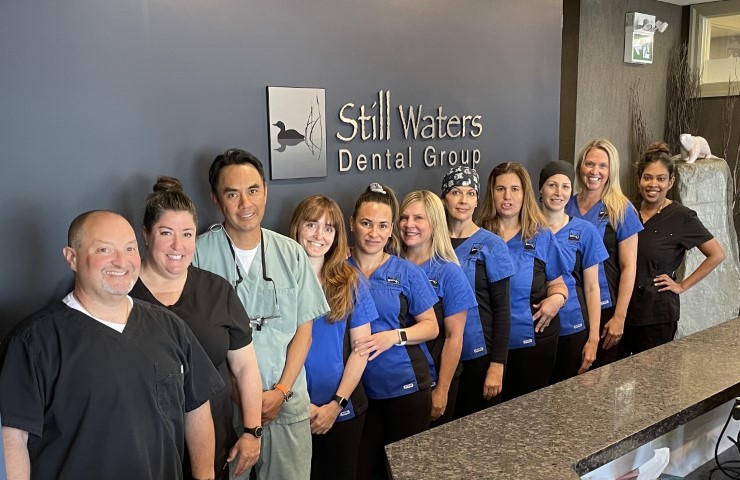
We provide gentle teeth cleanings for patients of all ages, from children's first hygiene visits to adults. Establishing a regular dental hygiene routine early helps set kids up for a lifetime of healthy smiles.
With evening and weekend hours six days a week, we are one of the more accessible options in Georgetown for a dental cleaning.
374 Guelph St #6, Georgetown, ON L7G 4B7
How often should I get my teeth cleaned?
For most people, every six months. If you have gum health concerns, your dentist may recommend more frequent visits. We'll suggest a schedule based on your needs.
Does a teeth cleaning hurt?
A routine cleaning is generally painless. If your gums are inflamed you may feel mild sensitivity, and we take extra care to keep you comfortable throughout.
How long does a dental cleaning take?
A typical cleaning and exam takes about 45 minutes to an hour, depending on how much buildup is present and whether X-rays are taken.
What's the difference between a regular cleaning and a deep cleaning?
A regular cleaning treats teeth at and above the gum line for patients with healthy gums. A deep cleaning (scaling and root planing) reaches below the gum line and is recommended when there are signs of gum disease.
Why do I need a professional cleaning if I brush and floss?
Even with great home care, plaque hardens into tartar that can't be removed by brushing or flossing only professional dental tools can take it off, and only a hygienist can clean below the gum line.